Event Summary#
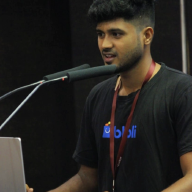
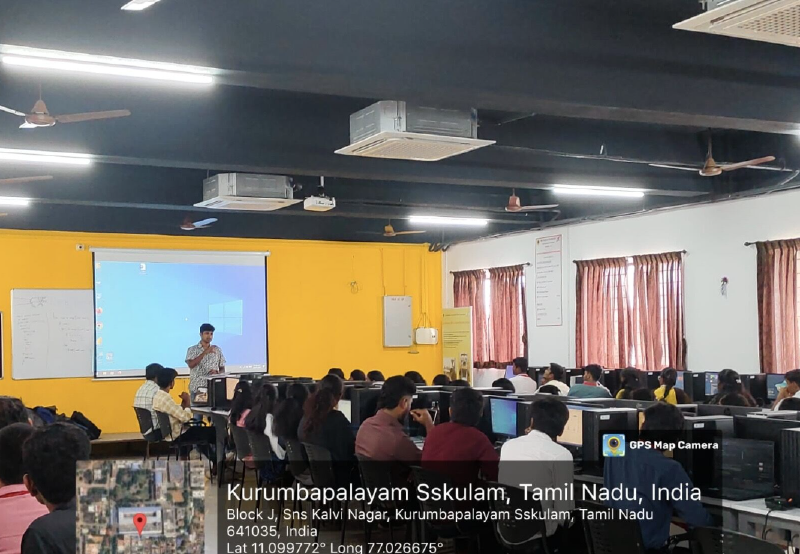
I recently had the opportunity to visit SNS College of Engineering, where I engaged with a group of highly enthusiastic and curious students in an interactive learning environment.
During this visit, I conducted sessions on Data Structures and Algorithms (DSA)—a core foundation for anyone beginning their journey in software development and problem-solving. The sessions were designed not just to introduce concepts, but to help students think logically, approach problems effectively, and build confidence in tackling real-world challenges.
What made this experience stand out was the interactive and collaborative nature of the sessions. Instead of a one-way lecture, the sessions evolved into:
- Active brainstorming discussions
- Problem-solving collaborations
- Real-time logical thinking exercises
Students brought diverse perspectives to the table, and their approaches to solving problems provided fresh insights into different ways of thinking. These interactions transformed the sessions into a two-way learning experience, where teaching and learning happened simultaneously.
Each session reinforced the idea that DSA is not just about coding—it’s about developing a problem-solving mindset. The curiosity, engagement, and energy shown by the students made the entire experience both exciting and deeply rewarding.
This visit was a reminder of why I am passionate about teaching: The ability to share knowledge while continuously learning and growing alongside others.
My Contribution#
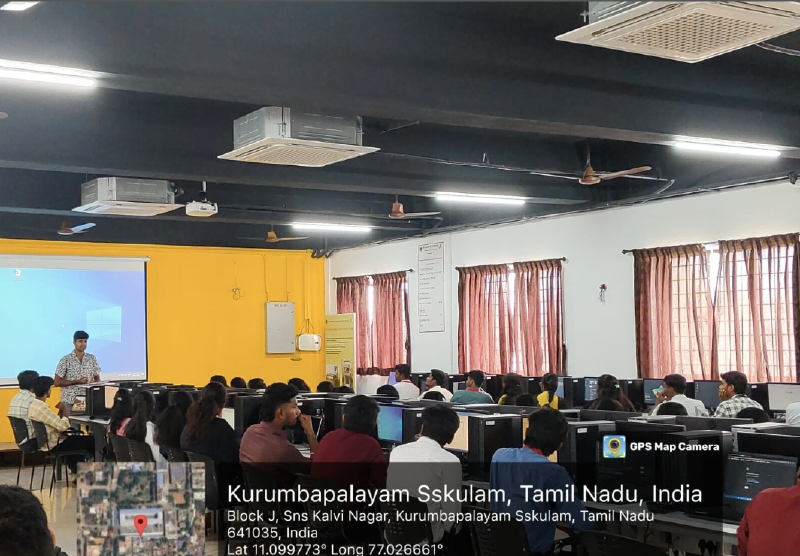
During my time at SNS College of Engineering, I contributed as a mentor and facilitator for DSA learning, focusing on both conceptual clarity and practical thinking.
My key contributions included:
- Delivering DSA Sessions: Taught core concepts of Data Structures and Algorithms with a focus on real-world application and problem-solving techniques.
- Interactive Teaching Approach: Encouraged students to actively participate, ask questions, and explore multiple approaches to solving problems.
- Facilitating Brainstorming Sessions: Guided students through logical thinking exercises and collaborative discussions to enhance analytical skills.
- Mentoring & Knowledge Sharing: Helped students understand how DSA plays a crucial role in technical interviews and software development careers.
- Continuous Learning: Used this opportunity to deepen my own understanding of DSA by engaging with unique problem-solving perspectives shared by students.
This experience was not just about teaching—it was about building a learning ecosystem where ideas flow freely, curiosity is encouraged, and growth happens collectively.
Relevant Links#
- LinkedIn: Post Link